


Back pain is a common problem that can affect work, exercise, or daily activities. Many people deal with lower back pain, often caused by issues in the musculoskeletal system.
About 97% of back pain cases come from mechanical strain. But doctors also look for signs of infections, fractures, inflammation, or tumors. These need special tests to diagnose.
At Anand Hospital, we focus on accurate diagnosis for each patient. We create personalized recovery plans. Our goal is to help you get back to your normal life with timely, effective medical care.
Key Takeaways
- Most spinal discomfort originates from mechanical issues rather than systemic disease.
- Serious conditions like fractures or infections require immediate professional evaluation.
- Anand Hospital offers precise diagnostic tools for complex spinal health issues.
- Individualized recovery plans are essential for long-term relief and mobility.
- Timely specialist care prevents chronic complications from developing over time.
Back Pain: Causes and Treatment
Back pain can feel like a dull ache or sharp, shooting pains. People often say it feels like burning, tingling, or a constant stiffness. Knowing these feelings is key to finding the right back pain: causes and treatment options.
What Back Pain Feels Like and How It Can Affect Daily Life
Pain can change how you move and feel every day. A dull ache might let you move a bit, but sharp pains can stop you from sitting or standing. Long-term pain can make you tired, irritable, and lower your quality of life.

Many people find their pain affects work and hobbies. Finding the back pain causes early helps manage it. Ignoring pain can lead to more injuries.
How Pain Location and Duration Guide Medical Evaluation
Doctors use where and how long pain lasts to diagnose. This helps them find the right treatment. It makes sure treatment works well.
Lower Back Pain, Upper Back Pain, and Radiating Pain
Lower back pain is common, affecting the hips or legs. Upper back pain is linked to posture or muscle strain. Pain that goes below the knee might mean nerve issues, like sciatica.
Acute, Subacute, and Chronic Back Pain
Pain can be acute, lasting weeks, or chronic, lasting months. Acute pain usually goes away in a few weeks. Chronic pain needs a long-term plan.
| Pain Category | Typical Duration | Primary Characteristics |
|---|---|---|
| Acute | Less than 6 weeks | Sudden onset, usually injury-related |
| Subacute | 6 to 12 weeks | Lingering discomfort, healing phase |
| Chronic | Over 12 weeks | Persistent, requires ongoing care |
Common Back Pain Causes
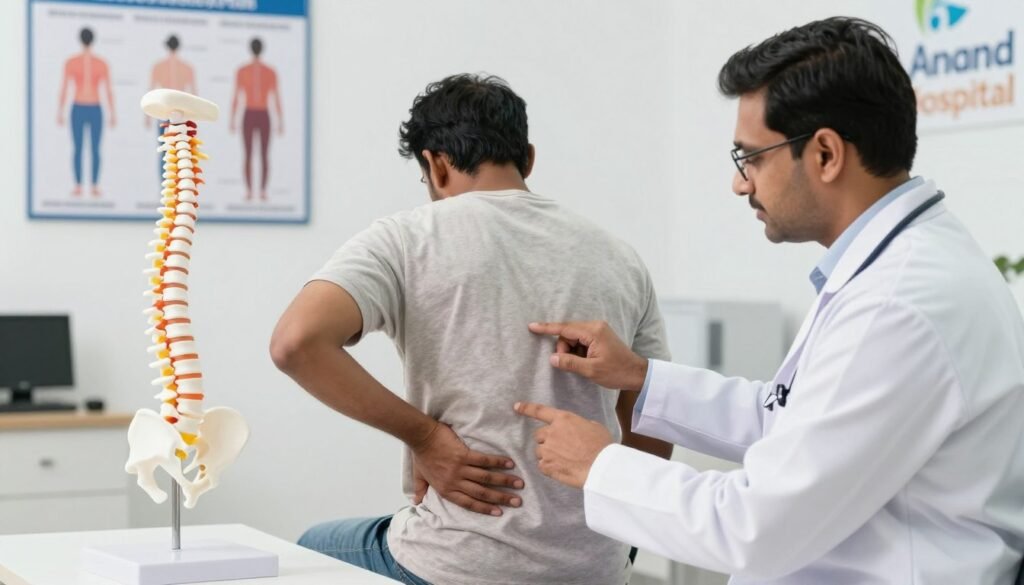
Understanding the cause of your back pain is key to finding relief. Most back pain causes are mechanical, coming from how we move and sit. Daily activities play a big role in our spinal health.
Muscle Strain, Ligament Injuries, and Overuse
Muscle strains and ligament sprains are common causes of sudden pain. These injuries happen when lifting heavy objects wrong or making sudden movements. Doing the same task over and over can also cause chronic inflammation in the spine’s soft tissues.
Poor Posture, Prolonged Sitting, and Workplace Ergonomics
Long hours at a desk can stress your lower back. Sitting or standing poorly can lead to lower back pain over time. It’s important to make sure your workspace is set up right for your spine.
- Keep your monitor at eye level.
- Use a chair that supports the natural curve of your spine.
- Take frequent breaks to stretch and move.
Age-Related Disc and Joint Changes
As we get older, our discs lose water and shrink. This can cause osteoarthritis or narrow the spinal canal. These changes are common back pain causes that happen over years.
Injuries, Falls, and Road Traffic Accidents
Traumatic events can severely damage the spine. Falls, sports injuries, and car accidents can cause fractures or severe soft tissue damage. It’s crucial to get medical help right away to avoid long-term problems.
How Obesity, Physical Inactivity, and Weak Core Muscles Increase Risk
Lifestyle choices affect lower back pain. Being overweight puts constant pressure on the spine. Weak core muscles don’t support the vertebrae well. Staying active helps keep the spine stable and lowers the risk of pain coming back.
| Risk Factor | Impact on Spine | Prevention Strategy |
|---|---|---|
| Obesity | Increased mechanical load | Weight management |
| Inactivity | Muscle atrophy | Regular exercise |
| Weak Core | Poor spinal support | Targeted strengthening |
Medical Conditions That May Cause Back Pain
While minor strains are common, some chronic conditions need special treatment to manage pain. Knowing the medical reason for your pain is key for long-term relief. These conditions often need a doctor’s diagnosis to stop them from getting worse.
Slipped or Herniated Disc and Sciatica
A herniated disc happens when the soft center of a spinal disc pushes through a tear. This can press on nerves, causing sharp, lower back pain that goes down the leg, known as sciatica. People often say it feels like an electric shock that gets worse with movement.
Spinal Stenosis, Spondylosis, and Facet Joint Problems
Spinal stenosis is when the spinal canal gets narrower, pressing on nerves. Spondylosis is wear and tear of the spinal discs with age. Facet joint problems are inflammation in the small joints between vertebrae. These back pain causes make it stiff and hard to move, mainly after sitting or lying still for a long time.
Osteoporosis, Vertebral Fractures, and Spinal Deformities
Osteoporosis makes bones weak, leading to fractures even without a big injury. These fractures can cause severe pain and change how you stand or sit. Finding it early is important to keep bones strong and prevent collapse.
Inflammatory Conditions Such as Ankylosing Spondylitis
Ankylosing spondylitis is a form of arthritis that mainly affects the spine. It starts with gradual-onset pain and a lot of stiffness in the morning. It gets better with activity. Over time, it can make vertebrae fuse, limiting how flexible and straight you can be.
When Kidney, Abdominal, or Gynecological Conditions Cause Referred Pain
Sometimes, back pain comes from internal organs, not the spine. Kidney stones, stomach problems, or gynecological issues can send pain to the back. It’s important to get a full check-up to tell these problems apart from regular lower back pain.
| Condition | Primary Symptom | Common Trigger |
|---|---|---|
| Herniated Disc | Radiating leg pain | Nerve compression |
| Spinal Stenosis | Leg heaviness | Walking or standing |
| Ankylosing Spondylitis | Morning stiffness | Inflammatory response |
| Vertebral Fracture | Sudden, sharp pain | Bone density loss |
Back Pain Symptoms That Need Medical Attention
It’s important to know when back pain is more than just a minor issue. Some back pain can be treated at home, but others need immediate medical help. Knowing the difference is key to keeping your spine healthy.
Warning Signs Requiring Urgent Evaluation
Some symptoms are serious and need quick attention. These can include nerve compression, infection, or spinal fractures. If you see these signs, go to Anand Hospital right away.
Loss of Bladder or Bowel Control
Changes in bladder or bowel function are critical warning signs. They might mean you have Cauda Equina Syndrome. This is a serious condition that needs fast surgery to avoid permanent damage.
Progressive Leg Weakness or Numbness
Leg weakness or numbness in the saddle area is a big warning. It often means your nerves are severely affected. If not treated, it could lead to serious mobility problems.
Fever, Unexplained Weight Loss, or Severe Night Pain
Fever or unexplained weight loss could mean an infection or tumor in your spine. Severe pain that wakes you up at night and doesn’t get better with rest is also a red flag. You need a detailed check-up.
When to Schedule an Appointment With a Spine Specialist
If your pain lasts more than a few weeks, see a spine specialist. They can check for structural problems or degenerative conditions that need special treatment.
Don’t ignore pain that makes daily tasks hard or keeps you from working. It’s time to get expert advice.
Why Persistent or Recurrent Pain Should Not Be Ignored
Ignoring pain can lead to chronic back pain, which is tough to treat. If pain keeps coming back, it means the problem hasn’t been fixed. This can cause muscle wasting or joint damage.
Effective chronic back pain management needs a plan made just for you. Tackling these issues early helps keep your spine healthy and your life quality high.
How Doctors Diagnose Back Pain
At Anand Hospital, our specialists use a detailed approach to find the cause of your pain. We look at your situation closely to understand the back pain causes affecting your life.
Medical History and Physical Examination
We start by talking about your health history. Our doctors will ask about when your symptoms started, where it hurts, and how long it lasts.
We also look at your past health, including any injuries or ongoing conditions. This helps us narrow down the back pain causes and make an accurate diagnosis.
Neurological and Musculoskeletal Tests
During the physical exam, we check your movement and find tender spots. We test your muscle strength, how you feel sensations, and reflexes.
We also watch how you walk. This helps us find issues with your spine or nervous system.
When X-Rays, MRI, CT Scans, or Blood Tests Are Needed
We use advanced imaging when we need more information. These tests are for suspected fractures, infections, tumors, or nerve problems.
| Diagnostic Tool | Primary Use | Clinical Benefit |
|---|---|---|
| X-Ray | Bone structure | Detects fractures or alignment issues |
| MRI | Soft tissues | Identifies disc herniation or nerve compression |
| Blood Tests | Systemic health | Screens for inflammatory markers or infection |
Why Imaging Is Not Always Necessary for Recent, Uncomplicated Pain
For many, imaging isn’t needed at first. If your pain is new and doesn’t have warning signs, we often start with simpler treatments.
Too much testing can cause unnecessary worry. We focus on improving your symptoms, not just finding structural changes.
How Diagnostic Findings Influence the Treatment Plan
After understanding your condition, we create a treatment plan just for you. Our goal is to tackle the specific back pain causes found during your evaluation.
Your treatment might include physical therapy, medication, or special procedures. Your diagnosis guides every step. We make sure your care is evidence-based and meets your needs.
Back Pain Treatment Options at Anand Hospital
At Anand Hospital, we mix modern medicine with care that focuses on you. Our team uses a careful plan to find the best treatment for each patient. This plan is based on their specific diagnosis and how severe their symptoms are.
Short-Term Medicines and Safe Pain Management
We start by reducing inflammation and easing pain. Our doctors give targeted medications to help you feel better. This gentle approach lets your body heal naturally, with our help.
Physiotherapy, Mobility Training, and Posture Correction
Physical therapy is key in our recovery plans. Our therapists create customized mobility training to strengthen your core and improve your spine’s alignment. We also work on fixing your posture to avoid future pain and keep your muscles healthy.
Injections and Minimally Invasive Procedures
If other treatments don’t work, we might suggest more advanced options. Epidural injections and other procedures target the source of pain. These methods are highly effective at giving quick relief, helping you do more in your recovery.
When Surgery May Be Recommended
Surgery is a last resort when other treatments don’t help. Our team carefully decides if surgery is the best choice for you.
Discectomy, Decompression, and Spinal Stabilization
We use advanced surgeries like discectomy to remove disc material that presses on nerves. Decompression creates more space in the spinal canal, and spinal stabilization keeps your vertebrae stable. These precision-based surgeries aim to fix your function and reduce pain.
How Specialists Balance Benefits, Risks, and Recovery Time
Our surgeons are open about surgery options with you. They consider the benefits, risks, and how long you’ll need to recover. This way, you’re fully informed and confident in your treatment plan.
| Treatment Category | Primary Goal | Typical Duration | Invasiveness |
|---|---|---|---|
| Conservative Care | Inflammation reduction | 2–6 weeks | None |
| Physiotherapy | Strength and mobility | 4–12 weeks | Low |
| Injections | Targeted nerve relief | Single session | Minimal |
| Surgical Procedures | Structural correction | Variable | Moderate |
Lower Back Pain Relief and Daily Self-Care
You can make your life more comfortable every day. To manage lower back pain relief, mix rest with gentle movement. Small changes in your routine can greatly improve your life.
Back Pain Exercises for Flexibility and Core Strength
Doing back pain exercises regularly helps keep your spine stable. These exercises should be slow and controlled. Always stop if you feel sharp pain.
Gentle Stretching, Walking, and Low-Impact Activity
Walking is great for your spine without stressing your joints. Gentle stretches like pelvic tilts help release muscle tension. These activities improve blood flow and help heal lower back pain.
Exercises to Avoid During a Pain Flare or Nerve Symptoms
Avoid high-impact activities like running when you’re in pain. Stay away from deep bends or twists that can hurt a herniated disc. If you feel numbness, stop and see a doctor.
Using Heat, Cold, Sleep Support, and Activity Modification
Heat or cold packs can ease chronic back pain. Use ice first to reduce swelling, then heat to relax muscles. A pillow between your knees while sleeping keeps your spine aligned.
Ergonomic Adjustments for Home, Office, and Travel
Your environment affects your spine’s health. Make sure your chair supports your lower back at work. Use a cushion for back support when traveling and stand often to stretch.
Preventing Recurrence Through Weight Management and Regular Movement
Keeping a healthy weight lessens strain on your spine. Regular movement helps prevent stiffness from chronic back pain. Stay active and lift safely to support your spine long-term.
| Self-Care Method | Primary Benefit | Frequency |
|---|---|---|
| Gentle Walking | Improves circulation | Daily |
| Heat Therapy | Relaxes muscle spasms | As needed |
| Lumbar Support | Maintains posture | During sitting |
| Core Strengthening | Spinal stabilization | 3-4 times weekly |
Conclusion
Most discomfort comes from simple mechanical issues. These often fix with rest and small changes. Knowing about back pain helps you tell the difference between minor and serious problems.
If you keep feeling pain or notice nerve signs, see a doctor. Early help stops back pain from ruining your day. Our experts give you the right care for serious issues like inflammatory diseases.
Anand Hospital is here to help with lower back pain. Our team creates care plans just for you. We use the latest tech to help you feel better and live better.
Don’t ignore signs like fever, getting weaker, or trouble with your bladder. Call us at Anand Hospital for a check-up. Taking action now means a healthier spine and a better future.
About Anand Multispeciality Hospital
Anand Multispeciality Hospital is a trusted healthcare provider in Bhosari, Pimpri Chinchwad, Pune, offering comprehensive medical and orthopedic care. The hospital provides diagnosis and treatment for conditions including back pain, neck pain, spine-related problems, joint disorders, arthritis, and other musculoskeletal conditions. With experienced doctors, modern diagnostic facilities, 24×7 emergency support, and patient-focused treatment, Anand Hospital aims to provide personalized care and help patients manage pain and regain mobility.
FAQ
1. What are common causes of back pain?
Back pain can be related to muscle strain, spine problems, slipped discs, posture issues, injuries, or other orthopedic conditions.
2. When should I see a doctor for back pain in Bhosari?
Consult a doctor if back pain is persistent, severe, affects movement, or is accompanied by other concerning symptoms.
3. Where can I get back pain treatment in Pimpri Chinchwad?
Anand Multispeciality Hospital in Bhosari, Pimpri Chinchwad, Pune provides orthopedic consultation and back pain management.
4. Does Anand Hospital treat spine-related problems in Pune?
Yes. The orthopedic department provides care for back pain, neck pain, spine-related issues, slipped disc, and nerve-related pain.
5. How can I book a consultation for back pain at Anand Hospital?
You can contact Anand Multispeciality Hospital in Bhosari, Pimpri Chinchwad, Pune to schedule an orthopedic consultation.