

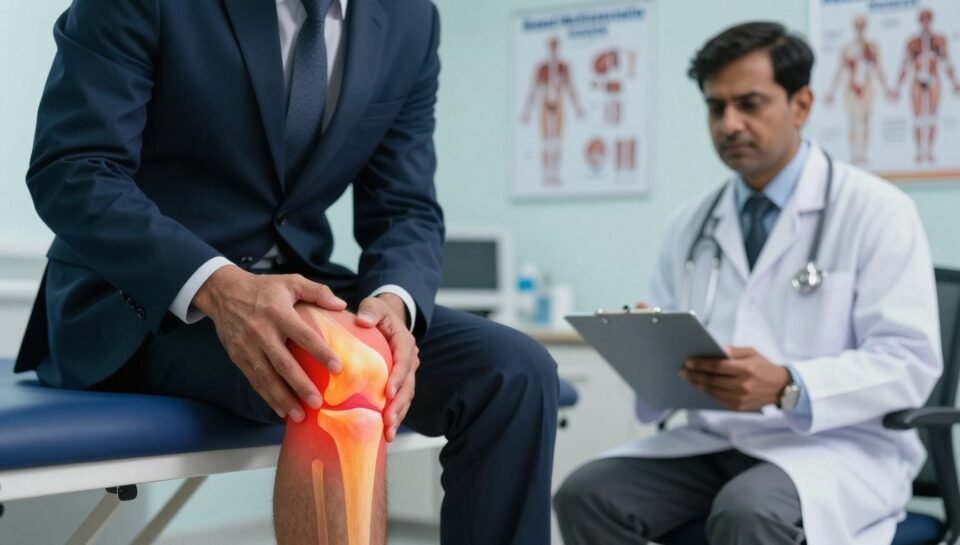
At Anand Hospital, we focus on keeping you mobile with top-notch orthopedic care. Knowing your lower limb’s anatomy is key for joint health. Our team creates a knee pain causes symptoms and treatment plan just for you, based on your health history.
Spotting knee pain causes early on leads to better results. If you feel stiff or see swelling, it’s important to act fast. We think a professional diagnosis is the first step to effective knee pain treatment.
Choosing us means you get access to the latest diagnostic tools and recovery plans made just for you. These plans help get you back to your active life.
Key Takeaways
- Anand Hospital offers specialized orthopedic care for joint health.
- Early professional diagnosis is critical for successful recovery.
- Understanding joint anatomy helps manage daily discomfort effectively.
- Personalized plans address individual medical histories for better results.
- Advanced diagnostic technology supports accurate identification of issues.
Understanding Knee Pain Causes Symptoms and Treatment
The human knee is a complex marvel that supports our body weight. It connects the femur, patella, and tibia, forming a hinge system. When this balance is disrupted, patients often feel knee joint pain that affects their life.
Anatomy of the Knee Joint
The knee has several key structures for stability and smooth motion. Cartilage covers the bones to prevent friction. The fibrous meniscus acts as a shock absorber.
Four primary ligaments, like the ACL and PCL, keep the bones in place. These tissues are crucial for movement. Knowing these parts helps us understand where knee joint pain often comes from.
| Component | Primary Function | Impact of Damage |
|---|---|---|
| Cartilage | Reduces friction | Bone-on-bone grinding |
| Meniscus | Shock absorption | Reduced joint stability |
| Ligaments | Structural support | Joint laxity or locking |
Common Risk Factors for Knee Discomfort
Age and excess body weight are major factors for knee issues. As we age, our tissues wear down. Being overweight adds extra stress to the joints.
Athletes and those with demanding jobs are at higher risk. Past injuries, like ligament tears, can also lead to knee joint pain. Knowing these risks helps us take steps to protect our joints.
Primary Causes of Knee Joint Pain
Finding out why your knee hurts is the first step to feeling better. There are many knee pain causes, from sudden injuries to slow wear and tear.
Acute Injuries and Trauma
Acute injuries happen during sports, falls, or sudden twists. They need quick medical help to avoid lasting damage.
Ligament Tears and Meniscus Damage
The knee’s stability comes from ligaments like the ACL and MCL. A tear can cause swelling and make it hard to walk.
The meniscus helps absorb shock between bones. Damage can make the knee lock or catch, needing fast medical care.
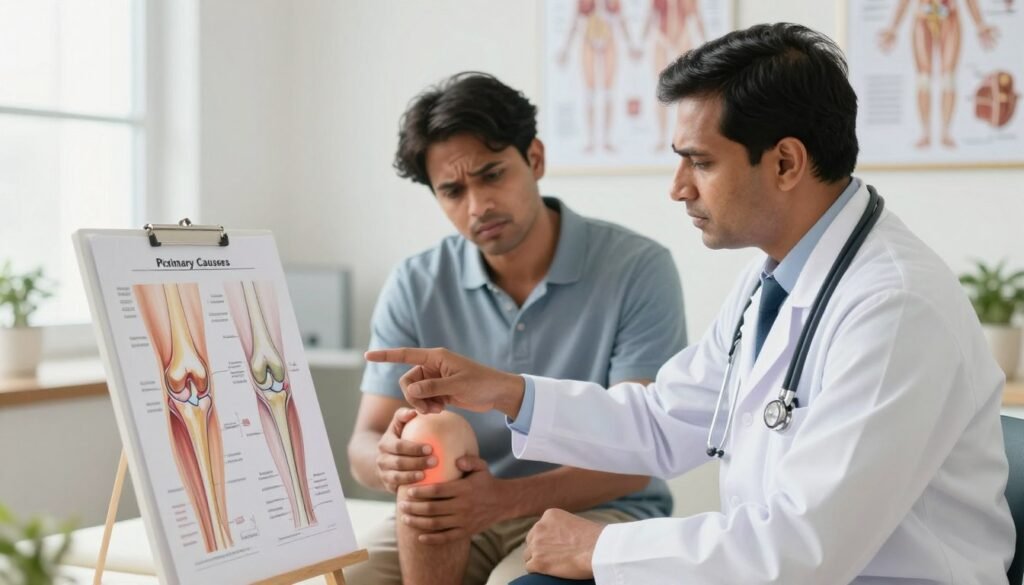
Fractures and Dislocations
Severe falls or car accidents can break the patella or the ends of bones. These are medical emergencies.
Knee dislocations are when bones move out of place. This is extremely serious and can harm nerves and blood vessels.
Chronic Conditions and Degenerative Diseases
Chronic conditions get worse over time if not treated. Spotting them early helps keep you moving well.
Osteoarthritis and Rheumatoid Arthritis
Osteoarthritis breaks down cartilage, causing bone friction. People often seek knee arthritis treatment for stiffness and pain.
Rheumatoid arthritis makes the body attack its own joints. It needs a full treatment plan to manage pain and prevent deformity.
Tendinitis and Bursitis
Tendinitis is inflammation from overuse. It’s common in athletes and those with hard jobs.
Bursitis happens when fluid sacs around the joint get inflamed. Good knee arthritis treatment includes physical therapy and lifestyle changes.
Recognizing Key Knee Pain Symptoms
Spotting knee pain symptoms early helps a lot. Knowing the signs your body sends can stop small issues from becoming big problems. At Anand Hospital, we tell patients to watch their joints closely for timely treatment.
Physical Signs of Inflammation
Inflammation is the body’s first sign of injury or stress. You might see changes around the joint that show internal trouble. Spotting these signs early helps you know when to rest or see a doctor.
Look out for these signs:
- Visible swelling or puffiness around the kneecap.
- A feeling of warmth when touching the skin near the joint.
- Redness or discoloration in the affected area.
- Tenderness to the touch, even without movement.
Functional Limitations and Mobility Issues
How your knee works during daily tasks shows its health. If you can’t move as easily, it’s time to think about your activities. Some gentle knee pain exercises can help, but don’t push through sharp pain.
| Symptom Type | Common Indicator | Recommended Action |
|---|---|---|
| Mild Stiffness | Difficulty bending after sitting | Gentle stretching |
| Sharp Pain | Stabbing sensation during movement | Immediate rest |
| Instability | Knee giving way | Consult a specialist |
Difficulty Walking or Climbing Stairs
Stairs are a key test for knee health. Pain or weakness while going up or down stairs means your joint is struggling. Consistent pain during these movements means it’s time to see a doctor at Anand Hospital.
Locking or Giving Way of the Knee
A knee that feels like it’s “locking” or suddenly giving way is serious. This usually means there’s a problem with the ligaments or cartilage. Avoid activities that put a lot of stress on your knee if you feel this way, as they can make things worse.
After your doctor says it’s okay, you might start some knee pain exercises to help. But always rest if your knee feels unstable or hurts during everyday activities.
Diagnostic Procedures at Anand Hospital
Getting a correct knee pain diagnosis starts with a detailed check-up by our experts. At Anand Hospital, we know that a precise check is key to a good recovery plan. Our specialists use a strict, evidence-based method to find out where your pain comes from.
Clinical Examination and Patient History
The first step is talking about your health history. Our doctors listen to your symptoms, how active you are, and any past injuries. This helps us understand your situation better.
Then, we do a thorough physical check. We look at how well your knee moves, its stability, and if there’s swelling. This hands-on check helps us find clues that guide our knee pain diagnosis.
Advanced Imaging Techniques
Modern medicine uses high-tech imaging to see what we can’t with a physical exam. We use top-notch technology to look inside your knee. This gives our team the details they need to plan your treatment.
Digital X-rays and MRI Scans
Digital X-rays help us check your bone health first. They show us fractures, bone spurs, or arthritis signs. For a closer look at soft tissues, we use MRI scans.
- Digital X-rays: Great for checking bone alignment and joint space.
- MRI Scans: Key for seeing ligaments, tendons, and cartilage in detail.
Ultrasound Diagnostics
Ultrasound diagnostics give us real-time images of your joint. It’s a non-invasive way to check soft tissue health while your knee moves. This helps us not miss any part of your joint function in our knee pain diagnosis.
We use these advanced tools to make sure each patient gets a care plan that fits them. By mixing clinical skill with modern imaging, we give you the clear plan you need to feel confident moving forward.
Comprehensive Knee Pain Treatment Options
Managing knee pain needs a plan that fits you. At Anand Hospital, we offer a wide range of care. Our team works with you to find the best solution for your pain.
Conservative Management Strategies
For many, the first step is non-surgical methods. These methods aim to reduce swelling and improve joint function. They are often very effective for early-stage pain and offer knee pain relief without surgery.
Physical Therapy and Knee Pain Exercises
Physical therapy is key in managing knee pain. Our therapists create exercises to strengthen muscles around the knee. This helps stabilize the joint and eases pressure on the cartilage.
- Customized stretching routines to improve flexibility.
- Low-impact strengthening exercises to build muscle support.
- Balance training to prevent future injuries and falls.
Medication and Lifestyle Modifications
For chronic pain, we use medicine and lifestyle changes. Anti-inflammatory drugs are often used to control swelling and pain.
We also focus on weight management and changing daily activities. Small changes can greatly improve your life and joint health.
Surgical Interventions
If non-surgical methods don’t work, surgery might be needed. Our surgeons use the latest technology for precise and quick recovery.
Arthroscopic Procedures
Arthroscopy is a minimally invasive knee pain treatment. It allows surgeons to see and fix damaged tissues through small cuts. It’s great for fixing meniscus tears or removing loose cartilage, helping you get back to normal faster.
Total Knee Replacement Surgery
For severe joint damage, total knee replacement is often the best choice. This surgery replaces damaged parts with prosthetics, helping you move better and live more actively.
Choosing the right knee arthritis treatment is a team effort. We aim to provide the best knee pain management for your lifestyle and goals.
Conclusion
Starting to care for your body is key. Taking action early helps keep you moving and active.
Getting a correct diagnosis is the first step to feeling better. At Anand Hospital, we use advanced tools to find out what’s causing your pain. This helps us create a plan just for you.
Working together with our team is important for managing your knee pain. We make plans that fit your needs. This way, you get the best care possible.
Don’t wait to see a doctor. It’s better to catch problems early. Contact our clinic for a consultation. Our experts are here to help you find relief and improve your daily life.
About Us
Anand Multispeciality Hospital provides advanced orthopedic care for knee pain, joint disorders, fractures, and sports injuries. Our experienced orthopedic specialists offer accurate diagnosis and personalized treatment for patients from Bhosari, Pimpri Chinchwad, and Pune, helping them recover faster and live pain-free with compassionate, quality healthcare.
FAQs
1. What are the common causes of knee pain?
Knee pain can be caused by arthritis, ligament injuries, sports injuries, fractures, overuse, or age-related wear and tear.
2. When should I consult a knee pain specialist in Bhosari?
If you have persistent knee pain, swelling, stiffness, or difficulty walking, consult an orthopedic specialist for timely diagnosis and treatment.
3. What treatments are available for knee pain?
Treatment may include medications, physiotherapy, lifestyle changes, injections, or surgery depending on the cause and severity of the condition.
4. Does Anand Multispeciality Hospital treat patients from Pimpri Chinchwad and Pune?
Yes. We provide expert knee pain diagnosis and treatment for patients from Bhosari, Pimpri Chinchwad (PCMC), and Pune.
5. Why choose Anand Multispeciality Hospital for knee pain treatment?
Our hospital offers experienced orthopedic doctors, advanced diagnostics, personalized treatment plans, and quality care to help patients regain mobility and reduce pain.